Home / Insights / Small business
Small businessSmall Business Websites: How They Help Grow Your Business
Running a small business in New Zealand? Here's how a simple, professional website can help people find you, trust you and get in touch.

Small business websites in NZ don't need to be expensive, complicated or full of technical jargon. Done properly, a website helps people find you on Google, backs up your word-of-mouth reputation and turns interested visitors into paying customers. Here's what a website can actually do for your business, without the fancy marketing talk.
Running a small business in New Zealand is hard enough without worrying about websites, Google rankings and all the technical stuff that goes with them. You've got customers to look after, bills to pay and a business to run. Maybe you've already got a Facebook page, a few happy customers spreading the word and enough work to keep you busy.
So why would you need a website? Fair question. A website isn't just somewhere to stick your logo and phone number. And despite what some website agencies might have you believe, you don't need to spend five grand to get something decent.
In this article
- Help more customers find you on Google
- Turn word of mouth into customers
- Look professional without spending a fortune
- Keep working after you've knocked off
- Make it easier to choose you
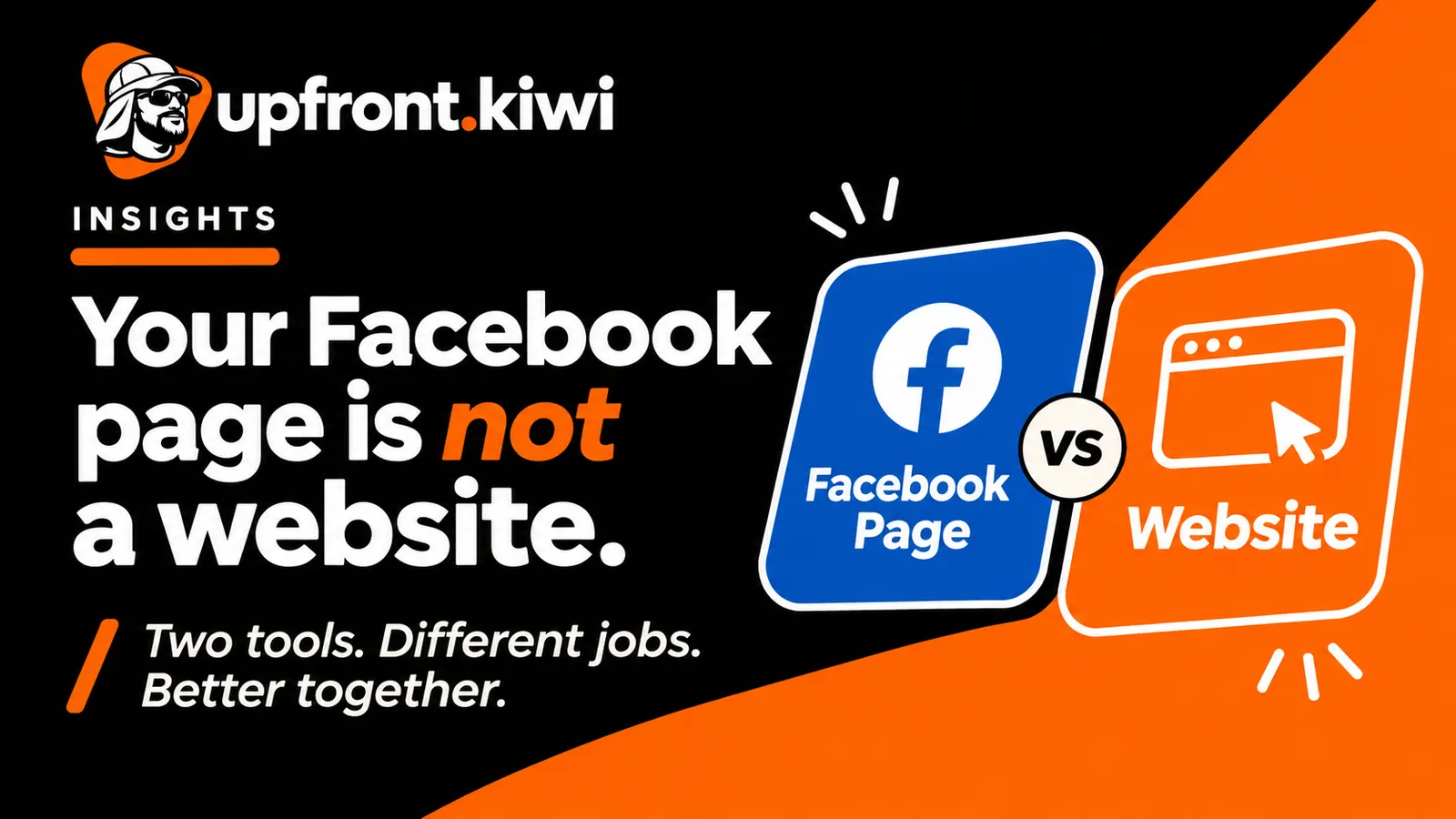
- Stop relying entirely on Facebook
- Help local customers find you
- Get more value from your advertising
- Save time answering the same questions
- Build something that grows with you
- What small business websites cost in NZ
- Hosting and ongoing costs
- If you can't afford the upfront cost
- How to know if your website is working
- Frequently asked questions
1. Help more customers find you on Google
Picture this. Someone in Masterton needs a plumber, so they pull out their phone and search “plumber Masterton”. Someone in Lower Hutt wants their lawns mowed and searches “lawn mowing Lower Hutt”. Someone in Hamilton is looking for a local electrician.
These people aren't just browsing. They're actively looking for a business that can help them.
Wouldn't it be nice if yours was one of the businesses they found?
That's where a website comes in. A properly built website gives Google useful information about your business, including what you do, where you're based and the services you offer. This helps search engines understand when your business might be relevant to someone's search.
For example, a local landscaping company might have separate pages for lawn mowing, hedge trimming and garden maintenance. Those pages help customers find what they're looking for, while giving Google a clearer picture of the services available.
Having a website doesn't mean you'll suddenly appear at number one on Google. Search engine optimisation (SEO, the work of helping Google understand and rank your site) takes time, and your competition matters too. But a website gives you a foundation to build on. Without one, you're missing an important chance to be discovered.
2. Turn word of mouth into actual customers
Word of mouth is still one of the best ways to grow a small business. You do a good job, someone tells their mate, and hopefully that mate gets in touch.
But there's often another step in between: they Google you. They want to see what you do, where you're based, what your work looks like and whether you seem like someone they can trust.
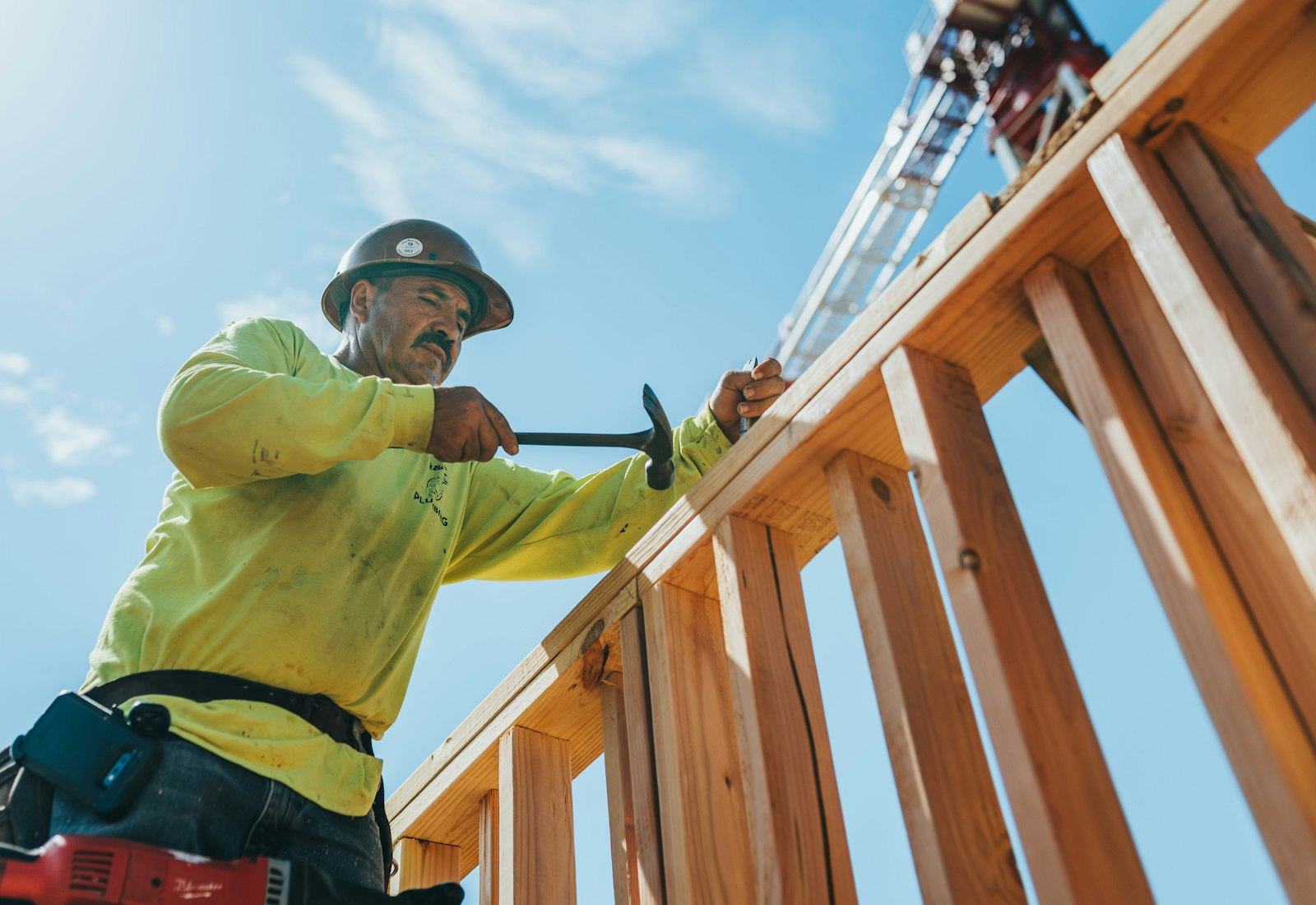
Two builders, one recommendation. Imagine someone is recommended two builders. One has a Facebook page with a couple of old photos. The other has a professional website with completed projects, services, customer reviews and an easy way to request a quote. Both might be equally good at their jobs, but the second has made it much easier for a potential customer to feel confident about getting in touch.
That's what a website can do. It doesn't replace your reputation. It backs it up, and for a small local business, that's worth a lot.
3. Look professional without spending a fortune
First impressions matter. You wouldn't turn up to a customer's house with tools falling out of your ute and your business name scribbled on a piece of cardboard. Well, hopefully not.
Your website is often the online version of that first meeting. A tidy, professional site shows customers you've put effort into your business. It gives them somewhere to find your services, see examples of your work and learn a little about who they're dealing with.
The good news is you don't need an enormous website with animations, complicated menus and dozens of pages. For many Kiwi small businesses, four well-designed pages can do the job nicely:
- Home: who you are, what you do and why someone should choose you.
- Services: what you offer and the areas you cover.
- About: your story, experience and what makes your business different.
- Contact: your details, location and an easy way to get in touch.
Add your own photos, branding and a mobile-friendly design, and you've got a solid online presence. That's exactly the shape of our Starter package, and you can see examples of our design work to get a feel for the finished result.
4. Your website keeps working after you've knocked off
Most small business owners aren't sitting around waiting for the phone to ring. You're juggling enquiries, doing the actual work, sending invoices and trying to remember whether you've eaten lunch.
Your website can take some of that pressure off. Unlike your phone, it doesn't need answering. Customers can visit at any hour to check your services, opening hours, location and contact details, browse your work and send an enquiry when it suits them.
Tip: Picture someone looking for a local painter at 9 pm while you're at home watching the rugby. They visit your website, see examples of your work and fill out a quote request form. You've got an enquiry waiting in the morning. No missed call, no late-night messages, no drama. Make sure your quote or contact form is easy to find on every page.
5. Make it easier for customers to choose you
Customers don't always choose the cheapest business. They often choose the one that makes things easiest.
If someone can't find your phone number, they might simply leave. If they don't know whether you service their area, they might try someone else. If they have to dig through social media posts to find your prices or opening hours, there's a good chance they'll give up.
A well-designed website removes those hassles. Different businesses need different things, but the goal is the same: give customers the information they need and make the next step obvious.
| Business | What makes the next step easy |
|---|---|
| Tradesperson | A big “Request a Quote” button |
| Local takeaway | A menu, opening hours and directions |
| Hairdresser | A list of treatments and online booking |
| Builder | A gallery of previous projects and an enquiry form |
The easier you make it, the better your chances of getting that enquiry.

6. Stop relying entirely on Facebook
Don't get us wrong. Facebook can be brilliant for small businesses. It's useful for sharing updates, showing off your work and staying in touch with customers. But relying on it as your only online presence has a few drawbacks.
Imagine someone wants to know whether your café has a gluten-free menu, but the answer is buried in a post from six months ago. Not particularly helpful.
| Facebook page only | Your own website | |
|---|---|---|
| Who's in control | Facebook controls the platform, layout and how many people see your posts | You control the layout, content and what visitors see first |
| Finding key details | Often buried in older posts | Organised into clear pages that are easy to find |
| Best used for | News, promotions and staying in touch | A proper home for your business and the next step to enquire |
Best of all, you don't have to ditch Facebook. Use it to share news and promotions, then send people to your website when they're ready to find out more. Social media gets people talking. Your website helps them take the next step.
7. Help local customers find your business
If you run a small business in New Zealand, chances are a big chunk of your customers come from your local area. That makes local search particularly important.
A website can explain which towns and suburbs you cover, along with the services you provide there. For example, an electrician based in Wellington might service Lower Hutt, Upper Hutt, Porirua and the Kāpiti Coast. A website makes that clear.
Tip: Your website works alongside your Google Business Profile, the free listing customers may see on Google Search and Maps. Keep your business name, address, phone number and hours the same on both.
Don't stuff your website full of town names and expect Google to reward you. Good local SEO is about genuinely useful information: explain your services clearly, list your real service areas and keep your details accurate. Those basics matter far more than trying to trick a search engine.
8. Get more value from your advertising
Already paying for Google Ads or Facebook advertising? Then a decent website becomes even more important.
Imagine you're paying for an ad promoting your plumbing services. Someone clicks because they need a hot water cylinder replaced. Ideally, that click takes them to a page about your hot water services, the areas you cover and how to request a quote. Not a confusing homepage where they have to hunt around for everything.
With the right tracking set up, you can also see which campaigns are bringing in enquiries, which makes it easier to judge whether your advertising is working. It doesn't guarantee profitable campaigns, as your offer, competition and ad setup all matter. But paying to attract visitors and then losing them to a hard-to-use website isn't a great strategy.
9. Save time answering the same questions
If you run a business, you've probably answered these more times than you can count:
- “What areas do you cover?”
- “How much does it cost?”
- “What time do you open?”
- “Do you offer free quotes?”
- “Can I see some of your work?”
A website can answer many of these before someone picks up the phone. Publish your services, general pricing, business hours and frequently asked questions in one easy-to-find place.
For customers, that means less mucking around. For you, it means fewer interruptions and more time to get on with the job. It won't eliminate questions completely, and nor should it, but helping customers find the basics themselves is a win for everyone.
10. Build something that can grow with your business
Your business might be a one-person operation today. But next year you might employ another tradie, open a second location or start selling products online. A website can grow alongside you.
- Start with what you need. A simple four-page site that explains your services and makes it easy to get in touch.
- Add content as you go. More service pages, project galleries and customer reviews, which our Business package is built for.
- Add features when they make sense. Online bookings or a shop can come later as part of a larger site.
There's no point paying for an enormous website with features you'll never use. Start with what suits your business now, then build on it.
How much do small business websites cost in NZ?
This is where many business owners put the whole website idea in the too-hard basket. They assume a professional website will cost thousands. Some do. A large custom site with advanced features, integrations and a completely bespoke design can cost a fair bit.
But most small businesses don't need anything that complicated. A local cleaner, painter, gardener or takeaway shop might only need a simple, professional website that looks good, explains their services and makes it easy to get in touch. That's what affordable website design in NZ should look like.
Our Starter package: a four-page website for phones, tablets and computers.
Starter sites can be live in as little as five working days once we have what we need.
Per month for 12 months if you'd rather pay monthly, then $39 a month.
The Starter package includes a contact form, click-to-call, map and opening hours, your own branding and an eligible .co.nz or .nz domain registered in your name for the first 12 months. No complicated technical setup, no endless meetings, no mystery quote.
| Package | Price | Best for |
|---|---|---|
| Starter | $499 | Four pages for sole traders and simple local businesses |
| Business | $999 | Up to eight pages, plus a gallery, reviews, local SEO and Google Analytics |
| Bookings & Shop | $1,799 | Up to eight pages with online bookings or an online shop |
You can compare everything on our website packages and pricing page. Want a more detailed breakdown? Have a read of How Much Does a Website Cost in New Zealand?
What about website hosting and ongoing costs?
Getting a website built is one thing. Keeping it online is another. Every website needs hosting (the server space that keeps it live on the internet), so it's important to understand the ongoing costs before you buy. We keep that straightforward too.
| Plan | Monthly | What you get |
|---|---|---|
| Essentials | $19 | Hosting only: keeps your website online, secure and running |
| Care (recommended) | $39 | Daily backups, security updates, uptime monitoring, a Microsoft 365 Outlook business mailbox and 30 minutes of website edits each month |
| Grow | $99 (first month free) | Monthly Google Business Profile posts, ranking and traffic reports, a review-request tool and extra editing time |
Rather manage your own hosting? That's fine too. We'll hand over your website files and a setup guide for free. No compulsory hosting subscription.
We explain the costs, ownership questions and common traps in Website Hosting in NZ: Costs, Ownership and Hidden Fees. Because knowing what you're paying for shouldn't require a detective.
What if you can't afford the upfront cost?
Starting or growing a small business can stretch the budget. We get it.
Pay monthly instead. Rather than paying for the Business package upfront, you can pay $129 per month for 12 months, including hosting and care. After that, the cost drops to $39 a month and the website is yours.
It's designed for businesses that want to keep upfront costs down while still getting a professional online presence. See how the monthly website option works before deciding which approach suits your budget.
How to know if your website is actually working
A nice-looking website is great. A website that helps your business is better. Once your site is live, keep an eye on how people use it. Are customers finding your services? Which pages are they visiting? Are people contacting you through the site?
Analytics tools give you useful information about traffic and visitor behaviour, but don't get too caught up in visitor numbers alone. A thousand visitors who never contact you aren't necessarily better than fifty local visitors who are genuinely interested in your services. For most small operators, what matters is enquiries, bookings, phone calls and paying customers.

Tip: Already have a website but not sure it's doing the job? Try our free Website Health Check. We look at speed, mobile usability, security, Google basics and how well your site supports enquiries, then send you a report explaining what we found and where improvements may help.
Key takeaways
- A website helps people find you on Google and gives Google clear information about what you do and where.
- It backs up your word-of-mouth reputation when people look you up.
- Four well-designed pages are often enough for a Kiwi small business to start.
- Use Facebook for news and your website as your proper online home.
- A professional site doesn't have to cost thousands: ours start at $499, or $129 a month.
Frequently asked questions
Does every small business need a website?
Not necessarily. Some small businesses do perfectly well through referrals and existing customer relationships. But if you want new customers to discover your services, learn about your business and contact you online, a website is a valuable tool.
Is a Facebook page enough for my business?
It can be a useful starting point, but a website gives you more control over your information, presentation and customer experience. Facebook and your website work best together rather than one replacing the other.
Will having a website automatically bring in customers?
No. A website doesn't guarantee traffic, enquiries or sales. It needs to be useful, easy to navigate and discoverable. Search visibility, advertising, word of mouth and ongoing marketing all contribute to results.
How long does it take to get a small business website built?
It depends on the size of the site. Our websites are usually live within 5 to 7 working days, and Starter sites can be live in as little as five working days once you've completed your online brief and supplied your content. You don't need to know anything about website design: you choose a package, fill in a short online form, send your details, photos and branding, and we handle the design and technical setup before sending you a preview.
Do I own my website if Upfront Kiwi builds it?
Yes. Your domain is registered in your name, and you own your website and content, subject to applicable template and third-party licensing terms. If you'd prefer to arrange your own hosting, we provide your website files and a handover guide.
Final thoughts: your next customer might already be looking for you
Growing a small business takes hard work. You've got to deliver a good product or service, look after your customers and build a reputation worth talking about. A website won't do all that for you, but it can make it easier for people to discover your business, understand what you offer and take that first step towards becoming a customer.
It doesn't have to be expensive. It doesn't need hundreds of pages. And it certainly shouldn't require you to become a computer expert.
At Upfront Kiwi, we believe every Kiwi small business deserves a proper website without the hefty agency bill. We're 100% New Zealand owned and operated, with more than 20 years of website design and SEO experience behind us. We started Upfront Kiwi in 2026 to make professional websites simpler and more affordable for everyday businesses across Aotearoa. You can read more about us, or send us a question through our online form.
Ready to give your business a proper online home?
A professional website from $499, live in as little as five working days. Whether you're a tradie, café owner, retailer or sole trader, we'll help get your business looking good online. Good websites, fair prices, no mucking around.